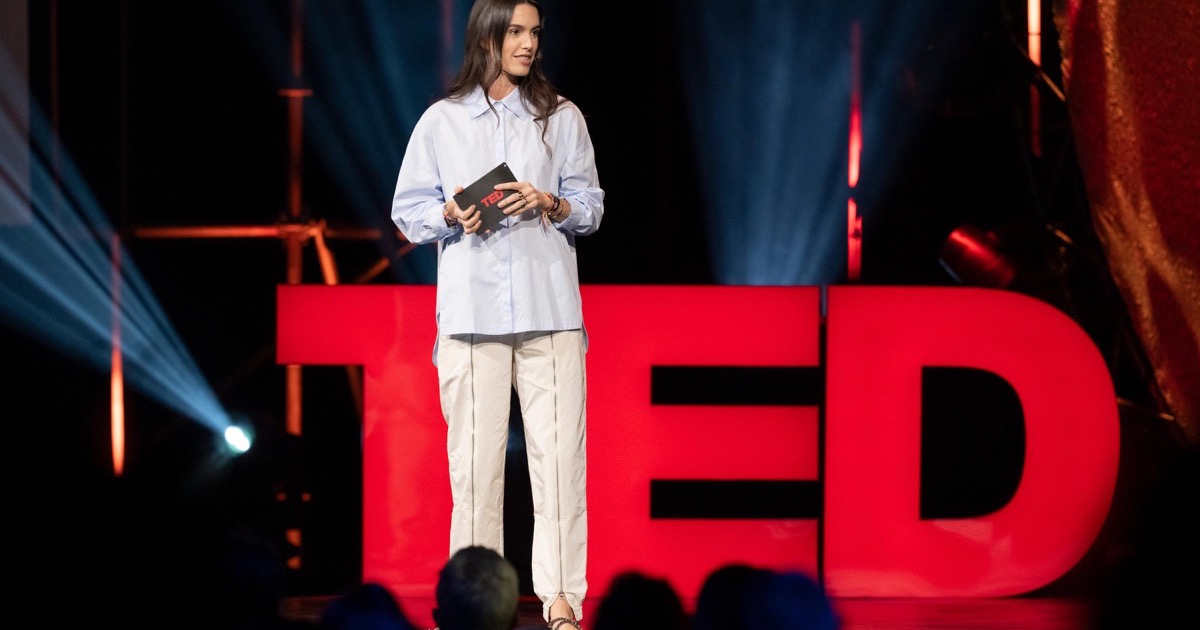
Reflections from TED Next 2025
By Jason Ardell, Co-Executive Director, TEDxBreckenridge
I returned from TED Next 2025 in Atlanta and immediately thought of the Ralph Waldo Emerson quote we feature on our speaker application page: “The mind, once stretched by a new idea, never returns to its original dimensions.”
For three days in November, my mind was stretched in every single direction—in the best possible way.
This was my first TED conference. I’ve been Co-Executive Director at TEDxBreckenridge since April 2025, alongside Leah Rybak, and I wanted to experience firsthand what TED does at scale. What I found was something I can only describe as the world’s nerdiest variety show—and I mean that as the highest compliment.
The Talks That Moved Me
TED has a gift for introducing you to ideas you didn’t know you needed. Some talks confirmed passions I already hold. Others opened entirely new windows.
Priya Lakhani: This Is How Kids Should Be Learning with AI
Priya Lakhani gave a talk that hit close to home as both an AI/ML practitioner and a parent. She spoke about building knowledge graphs of curricula and using AI to map the strength of connections between concepts that students demonstrate—then tailoring interventions to strengthen the weak links. What impressed me most was how deeply she rooted her approach in pedagogy while also demonstrating cutting-edge technical knowledge of techniques like Graph Neural Networks. Her vision is compelling: teachers spend more time designing curricula (which requires deep expertise), while AI tools personalize the pace for each student. The benefits she described—improved outcomes, less reliance on standardized testing, genuine personalization—left me wanting to see tools like these evaluated in Summit School District so my own kids might benefit.
Misty Copeland: How I Found Resilience Through Artistry
Misty Copeland reminded me why I love TED in the first place. I’m not a ballet fanatic. Her talk isn’t content I would have sought out on my own. But it’s a talk I needed to see. The obstacles she’s overcome, the glass ceilings she’s shattered as the first Black female principal dancer in American Ballet Theatre’s 75-year history, and the example she continues to set for future generations—her story is simply beautiful.
Sanjay Gupta on Whole-Person Medicine
Sanjay Gupta shared a fascinating case study about two patients with the same name who had the same surgery on the same day, yet recovered very differently. His point was striking: medicine is increasingly considering the whole person—not just the procedure—when it comes to care and recovery. It’s a shift in thinking that feels long overdue.
Paul Tazewell: Wicked’s Costume Designer on How to Tell Stories with Clothes
Paul Tazewell designs costumes for productions you’ve almost certainly experienced: Hamilton, West Side Story, Wicked. The depth of thought he brings to every stitch, silhouette, and gesture of color is astounding. He shared the cultural influences behind his work in a way that made me appreciate costume design as genuine storytelling. His timing was impeccable—Wicked: For Good would hit theaters just two weeks later.
Tom Sullam’s Hilarious Animal Photography
Tom Sullam provided exactly the kind of balance TED does so well. After hours of weighty ideas, he delivered a hilarious series of photographs of animals doing absurdly human things. Sometimes you need to laugh, and TED understands that deeply serious conferences also need moments of lightness.
Alex Rosenthal: What It’s Like to Have No Mental Images at All
Alex Rosenthal opened his talk with an exercise: “Close your eyes. Imagine a rocket ship landing on a planet. An alien walks over. An astronaut opens the hatch. Now—what color was the rocket ship? What did the alien look like?” Then he showed us what he sees when he does this exercise: a completely black screen. Alex has aphantasia—the absence of a mind’s eye. But he didn’t stop there. He expanded the idea beautifully: maybe there’s no single gold-standard brain. Maybe all of our cognitive abilities exist on spectrums, each with its own strengths and weaknesses. This connected with me personally. I’ve long suspected I have mild dysgraphia—an impaired ability to write by hand—and hearing Alex reframe neurodiversity as variation rather than deficit felt deeply human.
The Experience Beyond the Stage
TED clearly thinks hard about connection. For three days, I was surrounded by people who had carved out time and invested significantly to be there—the intellectually curious, the lifelong learners. It felt like being back in my undergraduate days at Georgia Tech. You could almost hear the buzz of neurons connecting.
What struck me was how many different ways TED created opportunities for people to find each other: Dine Arounds at local restaurants with semi-guided conversations, happy hours, shared breakfasts and lunches, a newcomers reception, meet-and-greets with speakers, even a dance party. They thought about it from every angle—what brings each person to TED, and what would help them feel connected?
Everyone’s badge had prompts for “Talk to me about…” Mine read: “AI, logistics, and pizza ovens.” (I work in AI and logistics, and I love making Neapolitan-style pizzas with my kids in our backyard.) It was a remarkable conversation starter, especially at the Dine Around dinners where we were bussed to various restaurants to share meals with new friends.
The TED Connect app made it easy to scan badges, message new connections, schedule activities, and navigate the venue. They even had quiet rooms with massage chairs for reflection and open rooms designed for conversation. The snacks and drinks were excellent—sweet, salty, tart, caffeinated, fizzy, flat—and they brought in a full coffee bar with baristas ready to make whatever you wanted.
Every detail communicated care.
What I’m Bringing Back to TEDxBreckenridge
When I debriefed with Leah after returning, two things stood out.
First, I want us to experiment with more ways to connect our attendees. TEDxBreckenridge serves a wonderfully diverse community—locals and seasonal residents, visitors and ski resort employees, parents of young kids and retirees, mentors and mentees, donors and those who struggle to make ends meet, people who love to wrestle with ideas and those who simply love to be immersed in them. How do we help each of them feel like they belong? TED showed me what’s possible when you design for connection from every angle.
Second, I appreciated how tight—not rushed, but not prolonged—the transitions were between talks. The pacing kept energy high and made room for more ideas without extending the event unnecessarily. I’d love to work with our emcees to keep our transitions equally concise.
An Invitation
I feel fortunate to have attended TED Next 2025. If you ever have the opportunity, I’d eagerly recommend the experience.
And if you’re reading this because you’re curious about TEDxBreckenridge—whether as an attendee, a speaker, a sponsor, or a supporter—I hope you’ll take the next step. We’re building something special in these mountains, and we’d love for you to be part of it.
Have an idea worth spreading? Apply to speak at TEDxBreckenridge.
Want to stay connected? Join our mailing list for updates on upcoming events.
Jason Ardell is Co-Executive Director of TEDxBreckenridge. When he’s not thinking about ideas worth spreading, he’s working in AI and logistics or making pizza with his kids.